
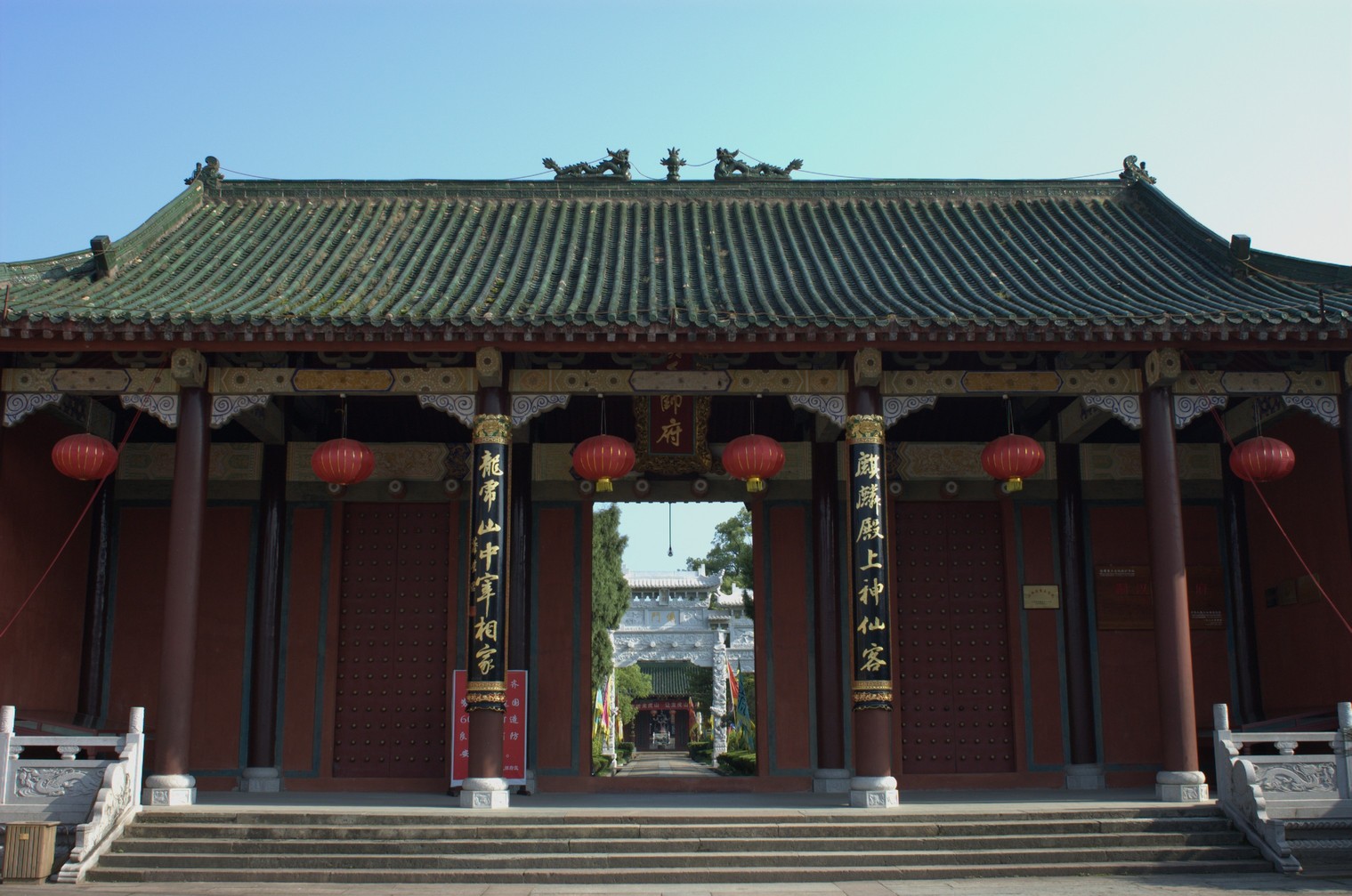
Tianshifu becomes easier to understand when the name is returned to a place: Shangqing, in the Longhu Mountain area of Jiangxi. Gates, courtyards and inscriptions turn an unfamiliar cultural term into something that can be looked at carefully, one detail at a time.
What is Tianshifu?
Tianshifu is commonly introduced in English as the Celestial Masters’ Mansion or Celestial Master Temple. Its Chinese name is also encountered as Sihan Tianshifu. It is closely associated with the Celestial Masters tradition and Zhengyi Daoist culture, and is an important point of reference for understanding the area.
Traditional narratives, religious lineage, building history and present-day practice are related but distinct subjects. A structure visible today should not automatically be treated as an intact survival from the time of an early historical figure. Specific dates need the support of site interpretation, conservation records or research.
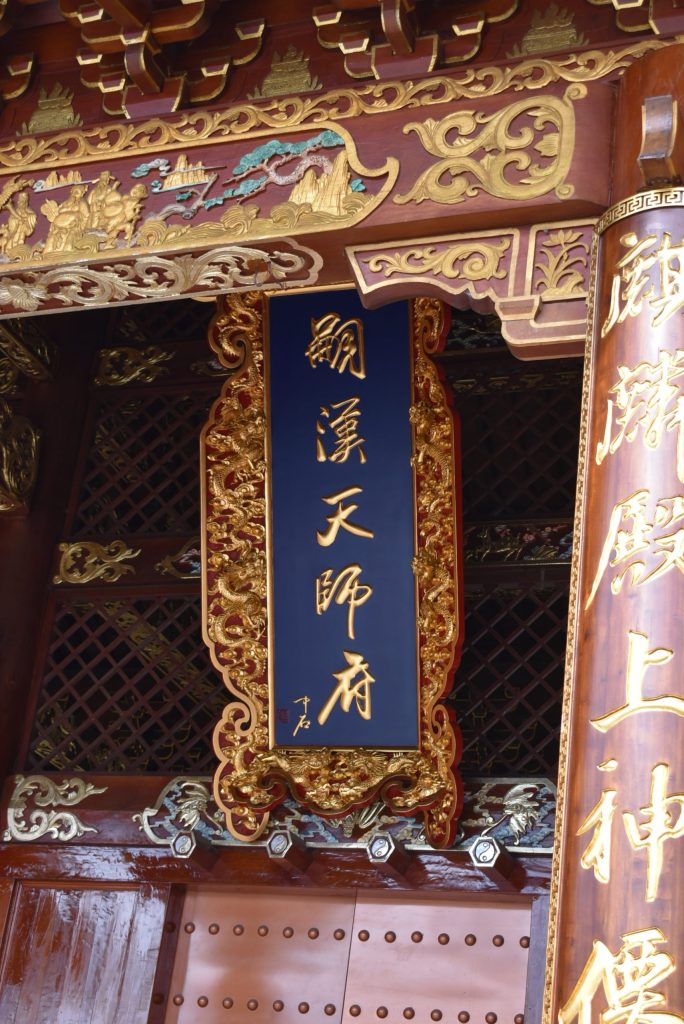
Read the spaces before collecting symbols
Traditional buildings can be approached through the way they organise movement. A gate frames the view; a courtyard opens it again; shade beneath an eave changes the pace of looking. These relationships are as informative as an ornate surface.
Inscriptions and paired texts also deserve attention beyond their appearance in photographs. Read available explanations and consider the function of the space in which they appear. Symbols from different halls should not be combined into one universal code or used to infer a special status for an unrelated product.
A place of continuing practice
A religious site is more than an architectural subject. Follow local guidance on accessible areas, photography and movement during activities. Ask before photographing individuals, leave ritual objects in place and avoid rearranging a setting for a picture.
When a custom is unfamiliar, quiet observation and a polite question are good starting points. Learning about a tradition does not require adopting a religious identity. Curiosity works best when it leaves room for the people who use the place.
How cultural context informs an object
Architectural rhythm, seal forms, cloud patterns and the open space of a fan can inspire contemporary design. A successful cultural object still needs to work in everyday life: a fan should be considered through its paper, ribs, opening action and care, while a pendant needs a clear account of material, size and wearing method.
A motif can enrich the story of an object, but it cannot establish the object’s origin, workmanship or an institutional endorsement. Those claims need their own evidence.
About this journal and shop
Tianshifu Dao Culture publishes cultural introductions alongside a retail collection. This article is not an official notice about a religious site’s opening conditions. Any specific product authorization, provenance or process should be assessed through the product information and supporting records, rather than inferred from the shop’s name or landscape photography.