A pendant, fan or small seal may carry a familiar shape with an unfamiliar name. A useful way to read it is to ask what it is, where it appears and how it fits the object. A list assigning a guaranteed effect to every symbol is much less helpful.
Taiji: more than two contrasting colors
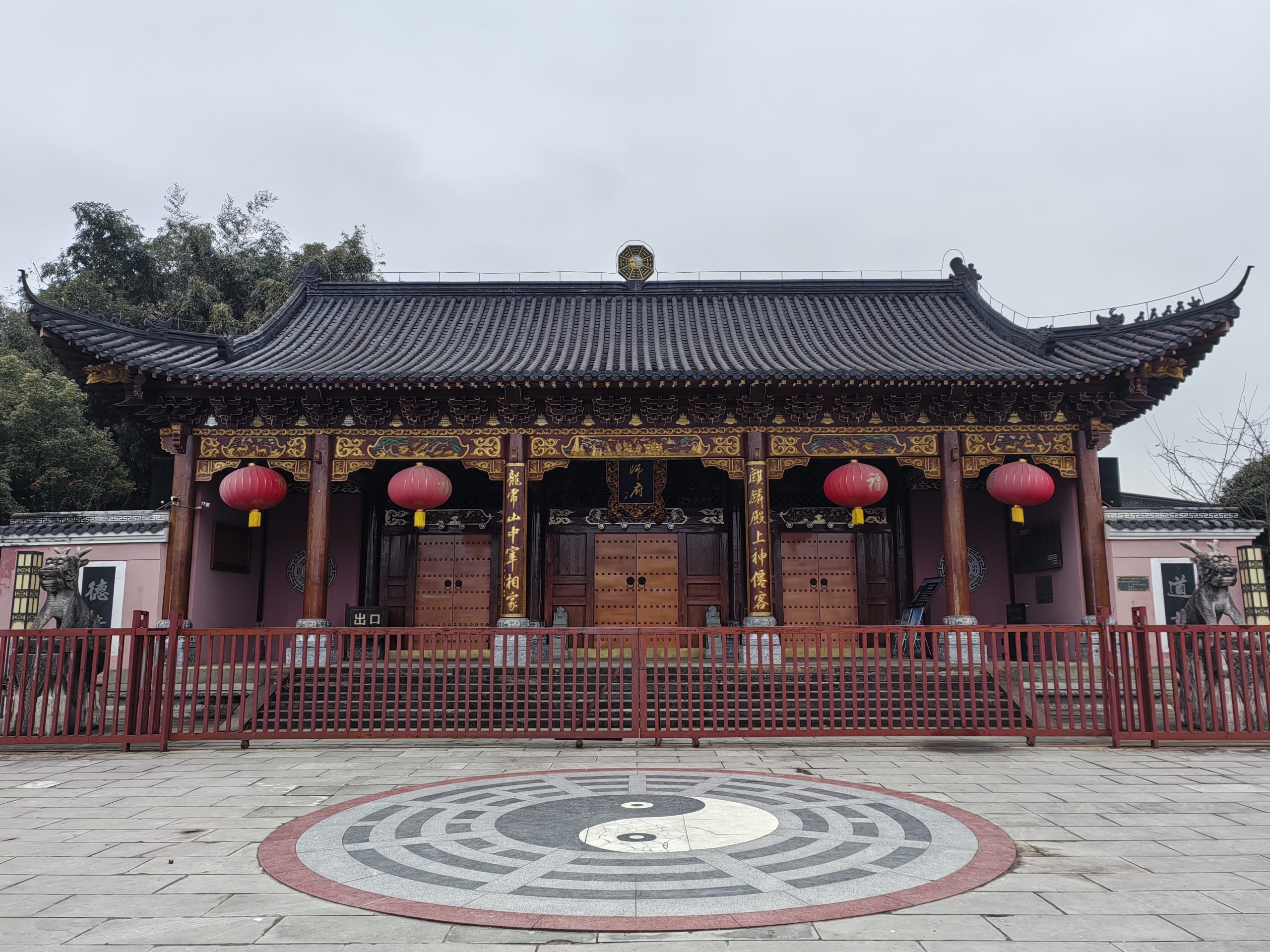
The familiar Taiji image offers a visual approach to the relationship between yin and yang: contrast, connection and change within a whole. Its use in philosophical explanation, religious settings and contemporary design does not make those contexts identical.
On an accessory, examine proportion and clarity. A small surface may work better with a simple, well-executed motif than with an elaborate pattern that is difficult to read. The presence of Taiji alone does not establish a religious function or a special provenance.

Cloud patterns and key-fret designs
Cloud patterns take many forms across periods and crafts. Curling or extending lines can suggest movement and openness. They are widely used in Chinese decorative arts and are not exclusive to Daoism.
Key-fret patterns often form a continuous geometric border. Their repeated turns can organise a surface and frame its main feature. Look at whether the border leaves enough room for the central design, and whether its density suits the object’s actual size.
A thunder pattern is not the same as thunder-rite imagery
The term thunder pattern in decorative-art history commonly refers to a geometric ornament. References to Five Thunder, Ziwei or seal forms associated with Daoist thunder traditions belong to a different layer of cultural meaning. Shared wording does not make them interchangeable.
Complex inscriptions and talisman-like forms should not be decoded by visual guesswork. Ask the seller for the specific design name and its source explanation. When that information is unavailable, leave the question open rather than assigning the same generic meaning to every design.
Symbolism and product claims
Traditional imagery may express wishes for peace, harmony or prosperity. That context can enrich a gift. It does not establish a guaranteed outcome, and it cannot replace clear information about an item’s material and workmanship.
Two objects may share a motif while differing in size, process and practical use. Their stories may overlap; their specifications still need individual attention.
A practical order for choosing
- Begin with the object: what is it for, and will its dimensions suit you?
- Examine the making: ask about material, engraving, printing or painting, and appropriate care.
- Read the motif: establish its name, context and the way it has been adapted.
For a friend encountering Chinese culture for the first time, a short, accurate explanation of a design is often a more thoughtful gift than a long list of unverified promises.