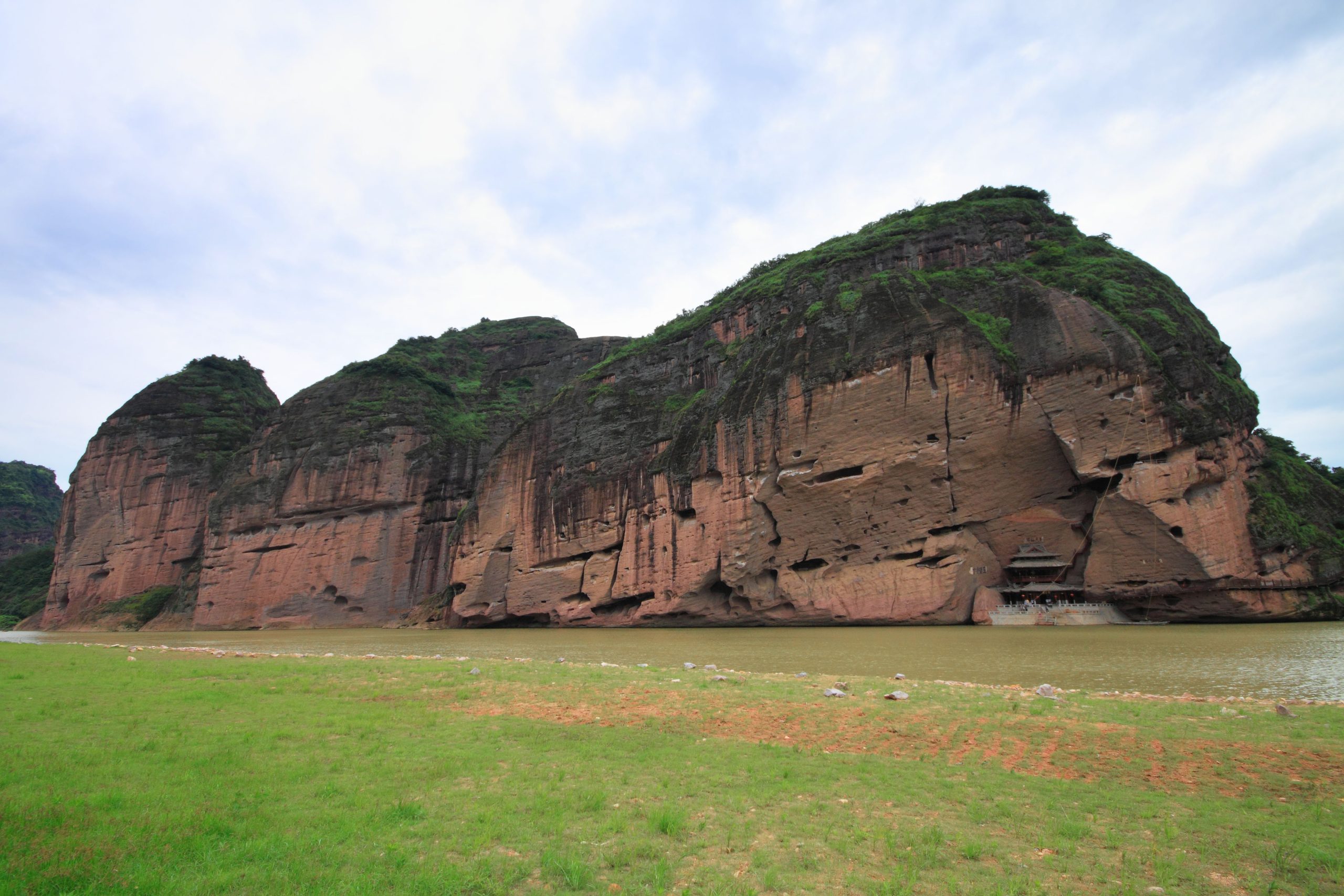
A useful first encounter with Longhu Mountain begins with the landscape. Red rock faces meet a wide river, vegetation softens their edges, and buildings return the view to a human scale. This is a place to read through geology and daily life as well as through religious history.
Where is Longhu Mountain?
Longhu Mountain, also written Longhushan, lies in the Yingtan area of Jiangxi, China. Its Danxia scenery forms part of the serial China Danxia World Heritage property. The term describes a landscape associated with red sedimentary rock shaped by weathering and erosion over long periods.
The cliffs are more than a backdrop to cultural stories. Their layers, openings and changing relation to vegetation offer a record on a different timescale. Looking carefully at those details can make a visit richer than collecting viewpoint names alone.
Follow the Luxi River
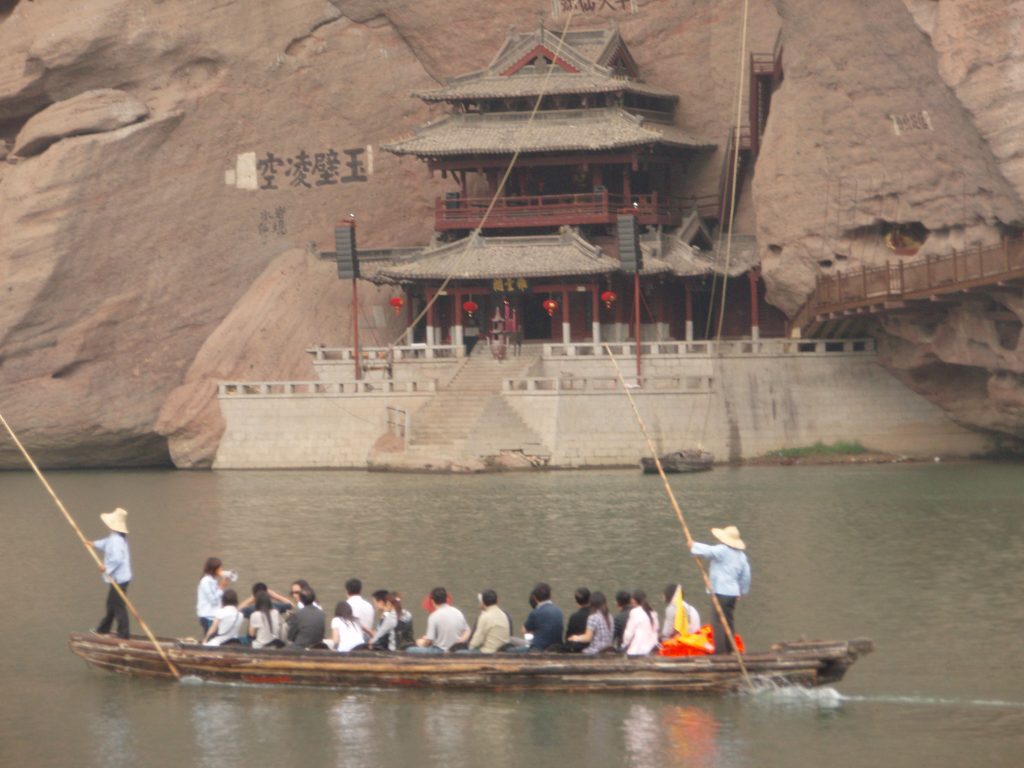
The Luxi River provides a helpful thread through the landscape. Seen from the water or its banks, cliffs gain depth and scale, while paths and houses show how people have lived alongside them. A broad view resolves into rock surfaces, riverside plants and rooflines.
Before planning a visit, distinguish between the natural scenic areas and the Shangqing town and Tianshifu area. They belong to the same cultural landscape but should not be treated as one compact courtyard. Check current transport, opening hours, weather and boat or raft arrangements with the relevant operators. This introduction avoids fixed prices and timetables that may quickly become outdated.
Landscape and Daoist heritage
Longhu Mountain has deep associations with the Celestial Masters and Zhengyi Daoist traditions. Accounts involving Zhang Daoling include religious tradition, local memory and historical interpretation. Understanding those layers is more useful than presenting every traditional story as a documented event.
For a contemporary reader, the idea of following nature may also suggest attending to how things actually behave: the grain of wood, the changes left by handling, or the space an object needs to be useful. This is a practical interpretation for daily life, rather than a claim to define Daoist doctrine.
From the landscape to an everyday object
A cultural object does not need every traditional symbol on its surface. A restrained finish, balanced proportions and clear material information can make a bracelet or incense holder more satisfying to use. Begin with fit and function, then explore the design’s cultural references.
Landscape photography establishes a setting, not the origin or quality of an individual product. Whether an item was made locally, uses a particular wood or involves a particular process must be supported by its own product information.
Three useful questions
Is Longhu Mountain only a religious destination?
No. Geology, river scenery, settlement and religious culture all contribute to its character.
Do I need prior knowledge of Daoism?
Start with place names, buildings and objects. Learn a term in its specific context rather than treating it as a universal explanation.
What should I ask before buying a souvenir?
Ask about material, dimensions, workmanship and care. Symbolism adds context but cannot replace practical buying information.